Our Industrial Foundation
Integrated. Scalable. Export-Ready.
We developed our operations in two structured phases to create a complete and continuous steel production cycle.
Phase 1: Induction Furnace Remelting Plant
In Phase 1, we recycle steel scrap into billets using advanced induction melting furnace technology. Our facility includes:
- 25 Tonne Induction Furnace
- Argon Oxygen Decarburization (AOD) system
- Continuous Casting Machine (CCM)
- Production capacity of 11,000 tonnes per month
This phase forms the metallurgical core of our operation converting reclaimed steel into high-performance billets suitable for downstream processing and international trade.
Circular Manufacturing
Local Processing. Global Reach.
At Abantu Africa Steel Mills, we process steel scrap domestically rather than allowing it to leave the country unrefined. Through induction, remelting and controlled casting, we return scrap to productive industrial use, bringing circular manufacturing into practice.
By strengthening local manufacturing capacity, we contribute to South Africa's circular economy objectives while positioning finished steel products for both domestic distribution and global export.
Our approach connects regional resource efficiency with international market participation.
Local Empowerment
Building Industry. Creating Opportunity.
At Abantu Africa Steel Mills, growth is measured not only in production, but in the opportunities we create. Across both phases of our operation, we generate meaningful employment within South Africa's industrial sector.
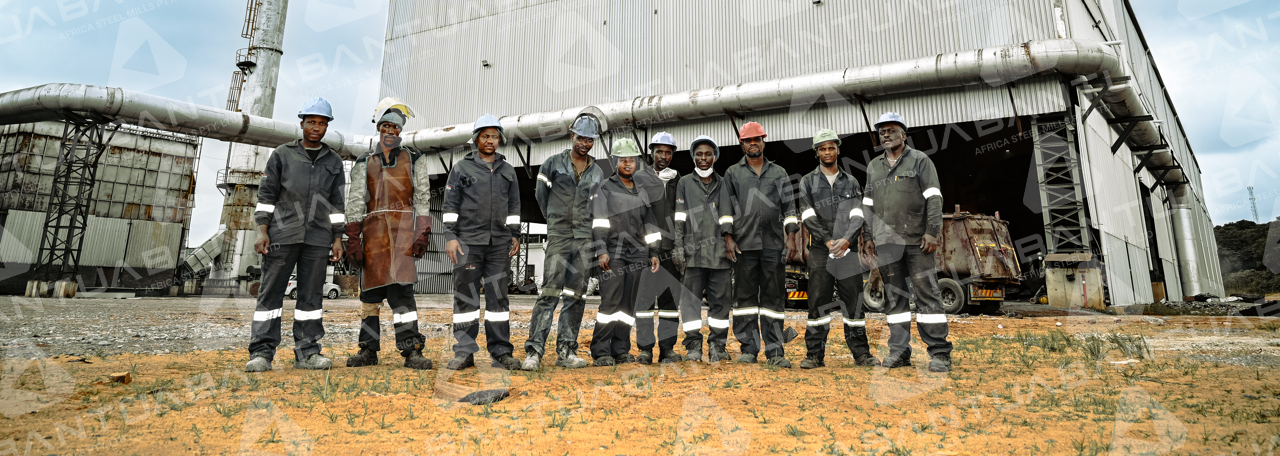
Phase 1
- 280 South African local employees
- 70 international technical specialists
Phase 2
- 120 additional South African local employees
- 30 additional international technical specialists
Total Impact
- 400 South African direct jobs
- 100 international technical roles
- ~200 indirect jobs
- ~700 employment opportunities overall
These roles contribute to skills development, technical exposure, and sustained industrial participation. Through structured growth and collaboration, we are strengthening local capability while building a manufacturing environment designed for long-term impact.